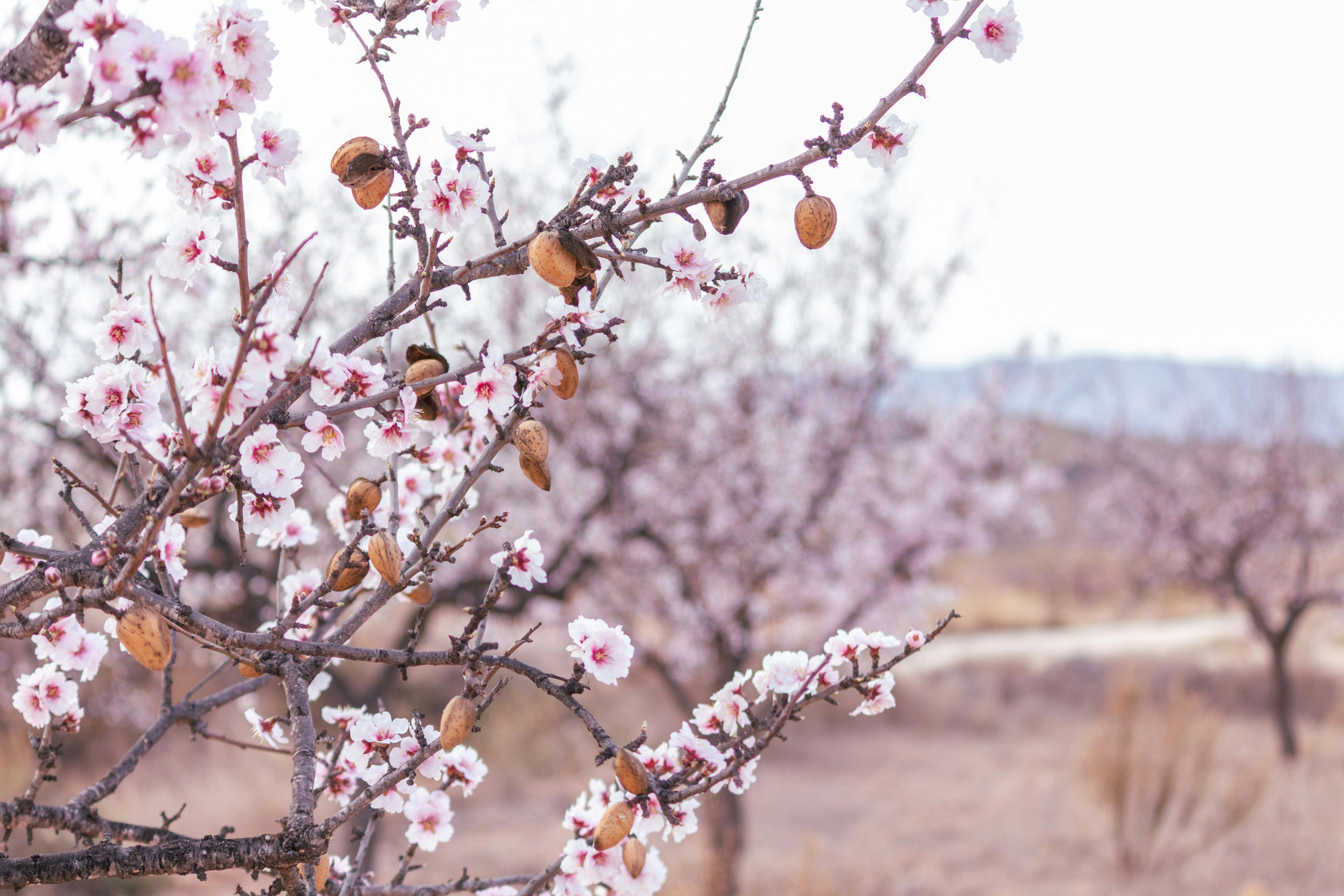
Blue Diamond Growers estimates California’s 2026 almond crop at 2.69 billion pounds as San Joaquin County growers watch the season ahead.
Blue Diamond Growers has released its early estimate for the 2026 California almond crop, projecting the crop at 2.69 billion pounds, with an estimated range between 2.675 billion and 2.72 billion pounds. The Sacramento-based cooperative said the estimate is based on early-season observations across California’s Central Valley, historical crop performance, and direct input from its nearly 3,000 grower-members.
The report comes as growers, handlers, buyers, and local agricultural communities continue watching a changing almond market closely. Blue Diamond said it is providing a scenario-based range this year to help growers and industry stakeholders plan ahead amid changes to U.S. Department of Agriculture almond crop reporting.
“Crop estimating is never a single-number exercise—conditions can vary dramatically by region, variety, and orchard management,” Mel Machado, chief agricultural officer of Blue Diamond Growers, said in the announcement. Machado said the range is intended to provide a practical early-season framework based on what the cooperative is seeing in the field and hearing directly from growers.
For communities in San Joaquin County, including the Ripon area, almonds remain an important part of the local agricultural economy. While city-level almond production statistics for Ripon are not typically broken out in public crop reports, the Ripon Chamber of Commerce notes that Ripon and its surrounding area are primarily agricultural, with grapes and several types of nut trees grown locally, and almonds described as the most prevalent among those nut crops.
Countywide, almonds continue to be one of San Joaquin County’s leading agricultural commodities. According to the county’s 2024 Annual Agricultural Crop Report, San Joaquin County’s total gross agricultural production was more than $3.14 billion in 2024. Almonds ranked as the county’s second-highest commodity at $492,310,000, behind milk at $536,945,000 and ahead of grapes at $319,310,000.
That local significance makes statewide almond crop estimates especially important for farming communities throughout the Central Valley. A smaller or larger crop can influence market expectations, grower planning, labor needs, water and orchard investment decisions, and the broader agricultural economy tied to processing, trucking, equipment, and related services.
Blue Diamond officials cautioned that the final crop size could still change as the season progresses. The cooperative said factors such as heat events, pest pressure, water availability, and orchard investment decisions could all affect final receipts before the crop year is complete.
The estimate also comes during a changing reporting year for the almond industry. The Almond Board of California recently noted that the USDA-NASS California Almond Subjective Forecast was scheduled for release on May 12, 2026, and that the report may look different because of broader USDA-NASS publication changes. The Almond Board also stated that the Subjective Forecast will be the only USDA yield-related almond report this year, after the Almond Board voted to stop funding the July USDA-NASS Objective Measurement Report.
California’s bearing almond acreage has also shifted. According to the Almond Board of California, Land IQ’s 2026 Standing Acreage Initial Estimate placed California bearing almond acreage at 1,385,870 acres, down from 1,401,097 bearing acres in 2025. The Almond Board said that represented the first drop in bearing almond acreage since 1995.
Jeff Hatfield, chief global supply officer for Blue Diamond Growers, said the cooperative’s goal is to provide a clear and data-informed outlook that helps reduce surprises for growers and customers. Blue Diamond said it expects to continue sharing crop and market updates as more information becomes available throughout the season.
For local growers and agricultural communities across San Joaquin County, the estimate offers an early look at a crop that remains deeply tied to the Central Valley economy. While the final numbers will depend on conditions in the months ahead, Blue Diamond’s projection gives the industry a starting point as the 2026 almond season moves forward.